Sewer Line Problems: Warning Signs and Professional Solutions
Is your home or business sending you strange signals—slow drains, sour smells, the ground outside a little squishier than usual? Sewer line problems rarely arrive with fanfare, but ignoring them can mean big trouble. At Sky High Plumbing, we’ve answered emergency plumbing calls at all hours, helping families and businesses avoid messy, costly disasters.
Sewer lines are the silent arteries of your plumbing system. When they’re in trouble, quick action can save you from health hazards, damage, and headaches. Here’s how to spot trouble, what to expect from a professional visit, and why acting fast matters.
Sewer Line Red Flags 🚩
It starts small. A gurgle. A whiff. A puddle. Most sewer line issues offer warning signs before full-on backups. Pay close attention to:
-
Slow Drains Throughout the House
If every sink and tub drains slowly, it’s rarely a coincidence. One clogged pipe is normal—every fixture sluggish at once means a deeper issue. -
Persistent Sewer Odors
If your bathroom or basement smells like rotten eggs, that’s sewer gas. It’s unpleasant—and a sign that something’s leaking or blocked. -
Gurgling Sounds
Hear bubbling from your drains or toilet after you flush? That’s air trapped in the line, often by a clog or collapse. -
Soggy or Greener Lawn Patches
A patch of grass that’s suddenly lush or damp could be sitting over a leaking sewer line. -
Unexplained Foundation Cracks or Sinkholes
Sewer leaks can wash away soil, undermining your foundation and creating dangerous voids. -
Frequent Backups or Overflows
If your lower-level fixtures overflow when you use upstairs plumbing, your main sewer line is likely blocked.
Tip: The National Association of Home Builders recommends annual inspections of older homes for early detection.
Quick Safety Checklist
Before you reach for that plunger or drain cleaner, run through this quick list:
- Is there standing sewage in your basement or yard?
- Do you smell strong gas or sewage odors indoors?
- Are any electrical outlets or appliances at risk of water contact?
- Are children, pets, or customers nearby?
If the answer is “yes” to any of these, clear the area and call for emergency plumbing help.
DIY Diagnosis vs. Professional Assessment
Some homeowners like to investigate. Here’s what you can check safely—and when to stop:
What You Can Do:
- Remove drain covers and check for obvious clogs.
- Run water in different fixtures to see if the problem is isolated or widespread.
- Look for wet spots in your yard, especially above the sewer line path.
What You Shouldn’t Do:
- Never open a main sewer cleanout cap if you suspect a backup—pressurized waste can surge out.
- Avoid chemical drain cleaners; they rarely help with main line clogs and can damage pipes.
When to Call Sky High Plumbing: If drains throughout your property are slow, you smell sewage, or see water backing up—call a licensed plumber. These are signs the problem is beyond a simple fix.
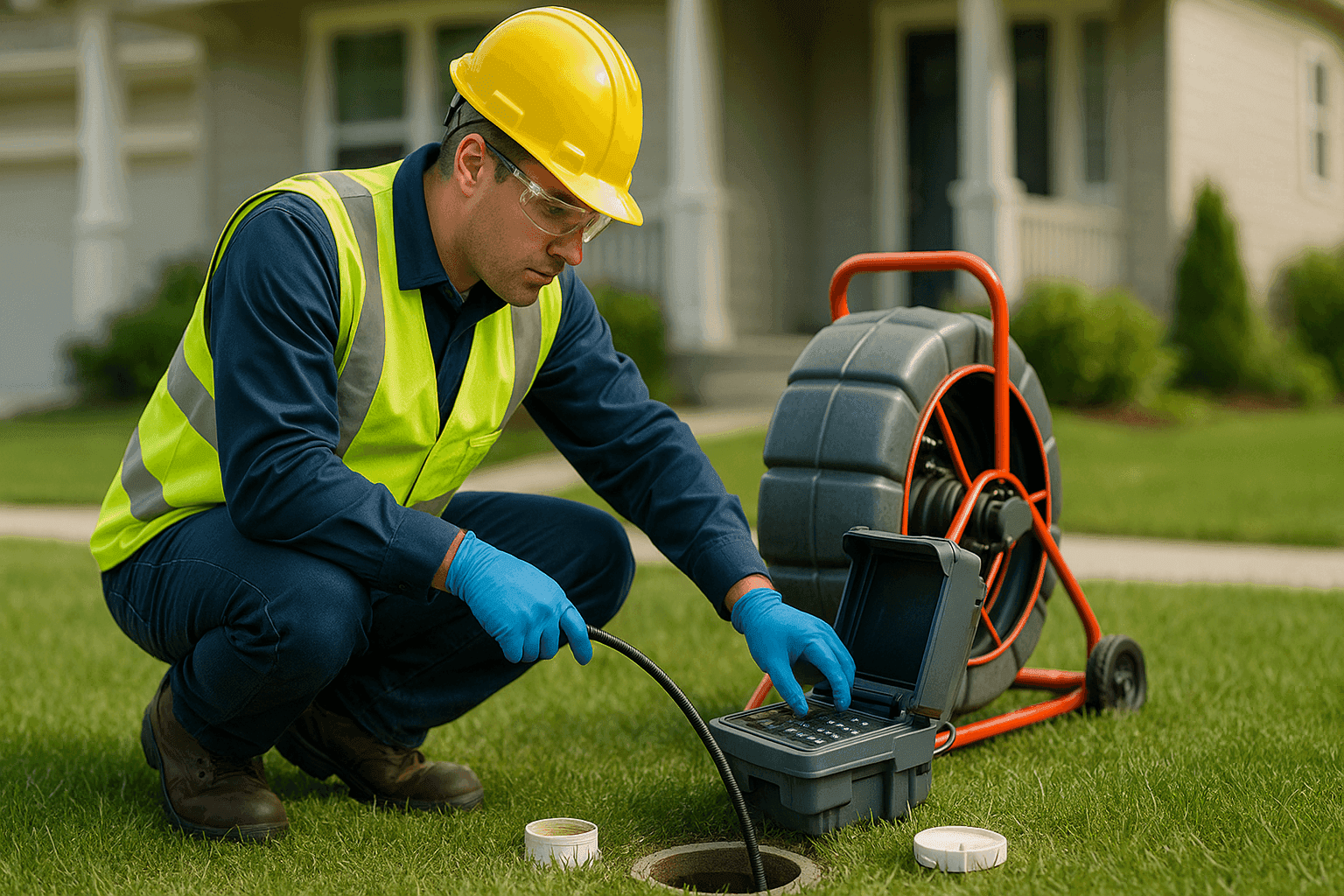
Video Inspection Explained 🎥
Wonder what’s happening under your lawn or slab? That’s where professional plumbers bring out the cameras.
How It Works
- A small, waterproof camera is threaded through a cleanout or drain.
- Live video shows the inside of your sewer line—from house to street.
- The technician can spot blockages, tree roots, cracks, or collapsed sections.
What Pros Look For
- Blockages: Grease, wipes, debris, or tree roots.
- Pipe Damage: Cracks, holes, or offset pipe joints.
- Bellies: Sections where the pipe sags and collects water.
- Material Issues: Old clay, cast iron, or Orangeburg pipes are more prone to failure.
Reference: The International Plumbing Code (IPC) recommends video inspection before any major sewer repair or replacement.
Repair Options: What Happens Next
Sewer line problems aren’t one-size-fits-all. At Sky High Plumbing, licensed technicians lay out your options based on what’s going on underground.
Common Solutions
- Hydro Jetting: High-pressure water blasts away grease and minor blockages.
- Pipe Relining: A resin-coated liner is inserted and cured, creating a new “pipe within a pipe” without digging.
- Spot Repairs: For isolated cracks or root intrusions, a small section may be replaced.
- Full Replacement: Severely damaged or sagging pipes may need trenchless or traditional replacement.
What About Warranties?
Ask your plumber about their work quality, parts used, and what’s covered. Reliable companies will walk you through what’s reasonable and what’s not.
Prevention & Maintenance
A little care today keeps emergencies at bay. Here’s how to avoid sewer line headaches:
- Don’t flush wipes, diapers, or feminine products—even “flushable” ones can clog pipes.
- Keep grease, coffee grounds, and stringy foods out of the kitchen sink and garbage disposal.
- Plant trees away from sewer lines; roots are a major cause of damage.
- Schedule annual or biannual professional inspections, especially in older buildings.
Reference: The Environmental Protection Agency (EPA) recommends regular sewer maintenance for commercial properties.
Costs & Time Factors
Every sewer line issue is unique. Here’s what can affect the price and timeline:
- Diagnosis: Video inspections are fast—usually under an hour.
- Simple Clogs: Hydro jetting or snaking can clear lines the same day.
- Minor Repairs: Relining or spot repairs may take a few hours to a day.
- Full Replacement: Traditional dig-and-replace can take several days; trenchless methods are faster but depend on site conditions.
Costs range widely based on pipe length, depth, and damage. Most repairs are less expensive when caught early—waiting often means more digging, more damage, and higher bills.
When It’s an Emergency
A sewer backup is more than a mess—it's a health hazard. If you notice:
- Sewage coming up through drains or toilets
- Raw sewage outside your building
- Strong, persistent sewer gas indoors
Act immediately. Clear the area, keep people away, and call emergency plumbing services. Delays can mean water damage, mold, or even city code violations.
FAQ
Q: Can I use chemical drain cleaners for a main sewer clog?
A: No. They rarely clear main blockages and can corrode pipes. Professional tools like augers and hydro jetters work better and safer.
Q: How often should sewer lines be inspected?
A: For older properties or those with trees nearby, annual inspections are wise. Newer homes can go 2–3 years, unless you notice warning signs.
Q: Is trenchless sewer repair always possible?
A: Not always. Trenchless methods work best when the existing pipe isn’t heavily collapsed or misaligned. Your plumber will recommend the best fix.
Q: What’s the risk of waiting on sewer repairs?
A: Leaks can erode soil, damage foundations, and create unsafe living or working conditions. Early repairs are always safer and less costly.
Local/Seasonal Considerations 🏡
- Winter: Frozen ground can complicate digging, but trenchless repairs are often possible year-round.
- Spring: Thawing soil and heavy rain can reveal leaks as soggy patches or sudden backups.
- Tree Roots: Growing season is prime time for root intrusions—schedule checks before summer.
- Commercial Properties: High occupancy means more stress on sewer lines; consider preventative maintenance outside peak business hours.
Wrapping Up: When to Act
Sewer line issues don’t get better on their own. If you spot slow drains, odd smells, or soggy lawns, don’t wait for a catastrophe. Licensed, experienced technicians at Sky High Plumbing use advanced diagnostics to pinpoint the problem and offer clear, effective solutions—day or night.
Call Sky High Plumbing now — or reach us anytime at 877-730-8216 .