Backflow Prevention: Protecting Your Water Supply
Is your drinking water as clean as you think? Most people never worry about what’s coming out of their taps. But what if the water started flowing the wrong way? That’s backflow—a hidden risk that can turn a simple plumbing issue into a health emergency within minutes.
At Sky High Plumbing, we see what happens when backflow protection is overlooked. Our certified team responds 24/7 to emergencies and routine calls alike, keeping homes and businesses safe, legal, and worry-free.
What Is Backflow? 🚰
Imagine your plumbing as a one-way street. Clean water comes in, dirty water goes out. Backflow is when something flips the sign and water rushes backward—dragging contaminants with it. Like a river reversing course and flooding the shoreline, this can pull pesticides, waste, and bacteria into your clean supply.
Backflow happens more often than you’d think. A sudden drop in city water pressure (think water main break or fire hydrant use) can trigger it. So can a faulty valve or a poorly installed hose. Whether you run a restaurant downtown or own a cozy bungalow, the threat is the same.
Health & Legal Risks
Backflow isn’t just a plumbing problem—it’s a public health hazard. When dirty water sneaks into your drinking supply, it can carry:
- Bacteria and viruses (think E. coli, Salmonella)
- Fertilizers and pesticides
- Cleaning chemicals
- Sewage and waste
Even small amounts can make people sick. The CDC and local health departments warn that contaminated water can cause outbreaks of stomach illness, rashes, or worse.
That’s why plumbing codes—like the Uniform Plumbing Code (UPC) and International Plumbing Code (IPC)—require backflow prevention for many properties. Local laws often demand annual testing and certified installation. If you manage a commercial building, restaurant, or medical facility, compliance isn’t optional. Many municipalities also require backflow devices in residential homes with irrigation systems, pools, or fire sprinklers.
Types of Backflow Devices
Backflow preventers come in different shapes and sizes, each designed for a specific risk. Here’s a quick breakdown:
- Atmospheric Vacuum Breaker (AVB): Simple, reliable, and common on garden hoses and sprinkler systems.
- Pressure Vacuum Breaker (PVB): Offers higher protection, often installed on irrigation lines.
- Double Check Valve Assembly (DCVA): Two check valves in one device—used on fire sprinkler systems or commercial properties.
- Reduced Pressure Zone (RPZ) Assembly: Gold standard for high-risk sites like hospitals or commercial kitchens.
Choosing the right device depends on your property, the water system layout, and local code. Don’t guess. The wrong choice can leave you unprotected—or even out of compliance.
Testing & Maintenance Requirements 🛠️
A backflow preventer is only as good as its last inspection. Over time, valves can stick, springs can wear out, and seals can fail. That’s why most city and county codes require:
- Annual testing by a certified backflow professional
- Test results submitted to your local water authority
- Immediate repair or replacement if the device fails
Sky High Plumbing’s certified testers handle the paperwork and device checks so you’re never caught off guard. Whether you manage a busy office or want peace of mind at home, routine maintenance keeps your water safe—and your building legal.
How Does Testing Work?
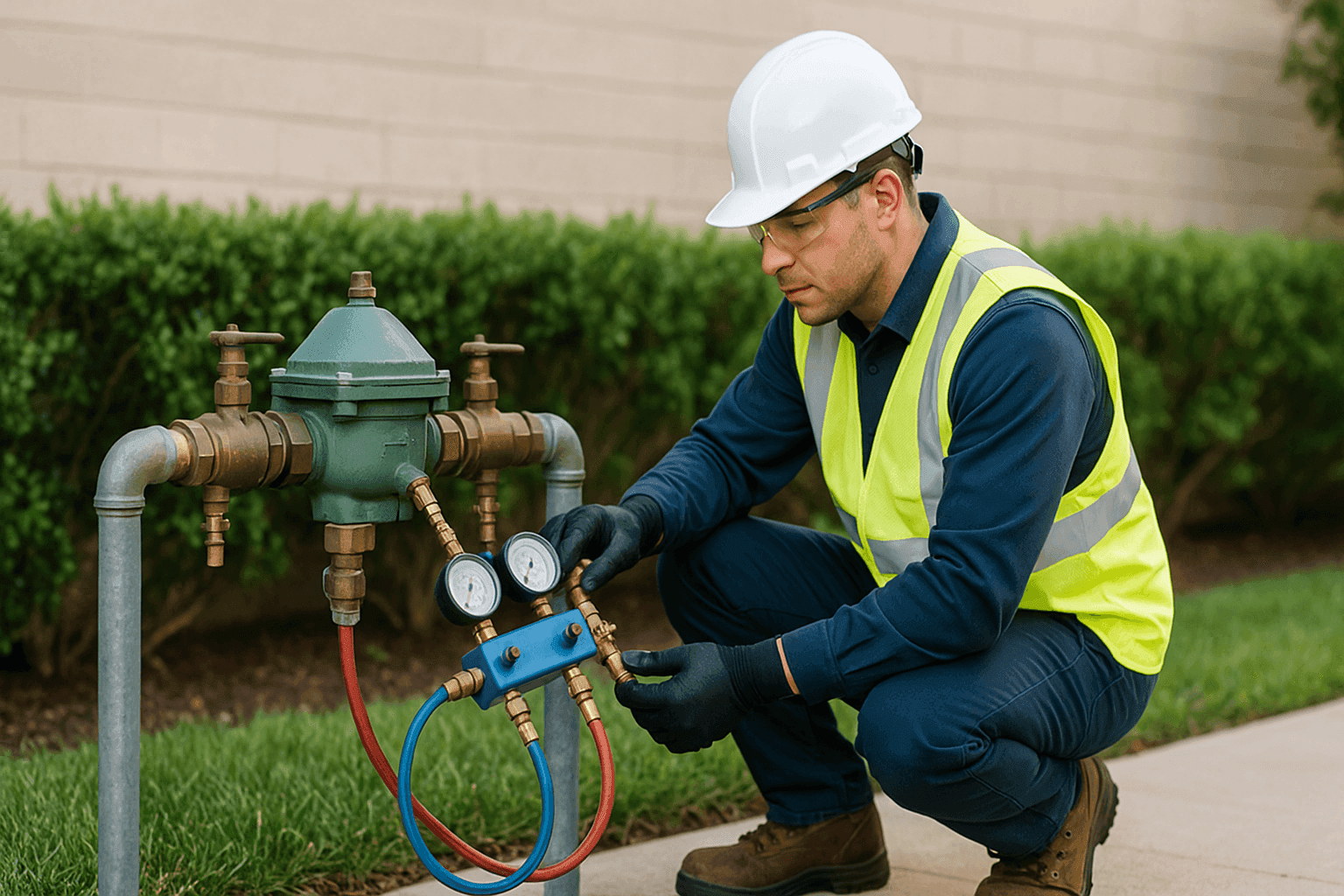
- Shutoff: We isolate the device from the main water supply—no risk to the rest of your plumbing.
- Pressure checks: Using calibrated gauges, we test that valves close tightly and hold pressure.
- Paperwork: We provide a full report for your records and deliver results to your local water authority as needed.
Who Needs Backflow Protection?
Not every property is required to have a backflow preventer, but more are covered by code than ever before. You need protection if you have:
- An irrigation or sprinkler system
- A swimming pool or spa
- A fire suppression (sprinkler) system
- A commercial kitchen, laundromat, or car wash
- Any connection to non-potable (untreated) water
Even in residential homes, exterior hose bibs and irrigation lines are common culprits for cross-connections.
If you’re unsure, Sky High Plumbing can inspect and advise on what’s legally required and what’s simply smart protection.
Staying Compliant: A Quick Safety Checklist
- Know if your property needs a backflow device (ask your water provider or Sky High Plumbing).
- Schedule annual testing with certified professionals.
- Keep copies of test results for at least three years (some cities require this).
- Repair or replace devices right away if they fail testing.
- Never bypass or remove a backflow preventer.
Types of Properties We Serve
Sky High Plumbing installs, repairs, and certifies backflow devices for:
- Restaurants, bars, and cafes
- Apartment complexes and condos
- Office buildings and retail spaces
- Schools and child care centers
- Residential homes with irrigation or pools
If you’re searching for “Sink Repair near you” or have emergency plumbing needs, we’re ready—day, night, or weekend.
DIY vs. Call a Pro 🔧
Some plumbing projects are great for handy homeowners. Backflow prevention isn’t one of them.
- Code compliance: Only a certified tester’s signature counts for inspections and legal paperwork.
- Specialized tools: Testing requires calibrated gauges and training.
- Risk: An incorrect installation can put your whole neighborhood at risk.
For peace of mind, let certified professionals handle installation, testing, and repairs.
What Pros Do On Arrival
When Sky High Plumbing arrives at your home or business, here’s what you can expect:
- Assessment: We review your plumbing system and identify every cross-connection risk.
- Device selection: We recommend the correct backflow device, sized and rated for your specific needs.
- Installation: Our pros install the device to code, test it, and make sure it’s leak-free.
- Documentation: We provide official test results and handle any required city filings.
- Education: We explain what we’ve done—plain and simple—and answer your questions.
Prevention & Maintenance Tips
- Never submerge hoses in buckets or pools.
- Use hose bib vacuum breakers on outdoor spigots.
- Avoid using spray attachments that can siphon chemicals back into your water supply.
- Schedule annual inspections—even if your city doesn’t demand it. Prevention costs less than cleanup.
Costs & Time Factors
- Testing: Most annual tests take less than an hour.
- Installation: Most residential installations are completed in a few hours; complex systems may take longer.
- Repairs: Simple fixes can be handled on the first visit. Full replacements may require device ordering.
Costs depend on device type, system size, and accessibility. We’re always upfront about what’s involved before any work begins.
When It’s an Emergency ⏱️
A sudden drop in water pressure. Dirty water from your tap. Or an alert from your water authority. These are red flags. If you suspect backflow:
- Turn off water at the main shutoff.
- Avoid drinking or using tap water until cleared.
- Call Sky High Plumbing for emergency plumbing service—day or night.
We respond fast and bring everything needed to test, repair, or replace your device on the spot.
FAQ: Backflow Prevention
Q: How do I know if I have a backflow device?
A: Look for a valve assembly (usually near your water meter or irrigation line) with test cocks and a tag showing the last inspection date. Not sure? We can check for you.
Q: Is backflow testing required for homes, or just businesses?
A: Many cities require backflow devices and annual tests for homes with irrigation, pools, or fire sprinklers—not just businesses. Always check your local code.
Q: What happens if I skip testing?
A: Water authorities can fine property owners or even shut off water service. More importantly, you risk contaminating your own or your neighbors’ water supply.
Q: Who can test or install backflow preventers?
A: Only certified testers—like those at Sky High Plumbing—can perform official inspections and complete required paperwork.
Local & Seasonal Considerations
In colder climates, backflow preventers can freeze and crack. We recommend winterizing outdoor devices. In drought-prone areas, irrigation systems pose extra risks. Local water authorities (like your city’s public works department) set strict rules based on regional needs—always stay informed.
Stay Safe, Stay Compliant
Backflow isn’t just a plumbing nuisance—it’s a threat to health and safety. Whether you’re a business owner or a homeowner, protecting your water is non-negotiable. Sky High Plumbing’s certified testers and 24/7 emergency plumbing service are one call away.
Call Sky High Plumbing now — or reach us anytime at 877-730-8216 .